



महारानी लक्ष्मीबाई मेडिकल कॉलेज, झांसी
Affiliated to Atal Bihari Vajpayee Medical University, Lucknow


महारानी लक्ष्मीबाई मेडिकल कॉलेज, झांसी
Affiliated to Atal Bihari Vajpayee Medical University, Lucknow
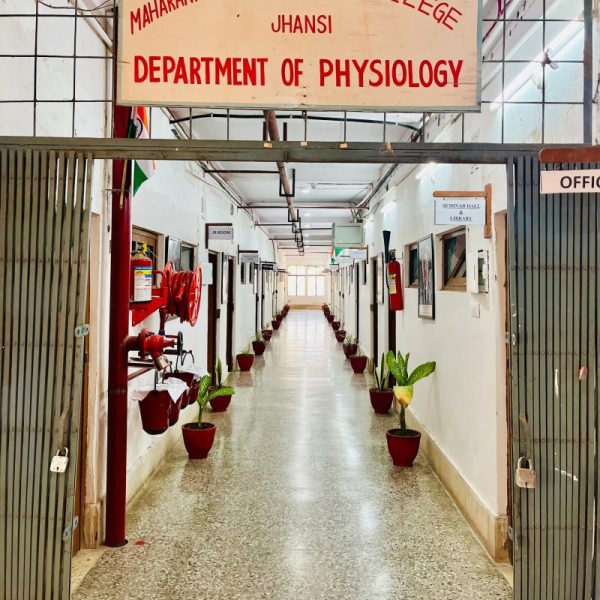
The Department of Physiology is one of the fundamental departments in medical education, dedicated to teaching the normal functions and mechanisms of the human body. The department plays a crucial role in building a strong scientific foundation for medical students, enabling them to understand the physiological basis of health and disease.
The Department of Physiology plays a vital role in undergraduate and postgraduate medical education by providing comprehensive theoretical knowledge, practical training, and research-oriented learning. The department caters to approximately 150 undergraduate (MBBS) students and 1 postgraduate (PG) student annually.
The department conducts a structured and competency-based curriculum designed to build a strong foundation in human physiology. The academic program includes:
The teaching methodology focuses on application-based learning, enabling students to correlate physiological principles with clinical conditions. Practical sessions are designed to enhance analytical thinking, interpretation of physiological data, and basic laboratory skills required in medical practice.
For postgraduate students, the department provides advanced academic and research-oriented training to strengthen subject expertise and teaching competence. The PG training program includes:
To promote critical thinking, communication skills, and scientific temperament, the department regularly organizes:
The department places strong emphasis on competency-based medical education (CBME), ensuring that students develop analytical ability, problem-solving skills, and practical laboratory competence essential for medical professionals.
0510-2321446
: info@mlbmcj.in

